
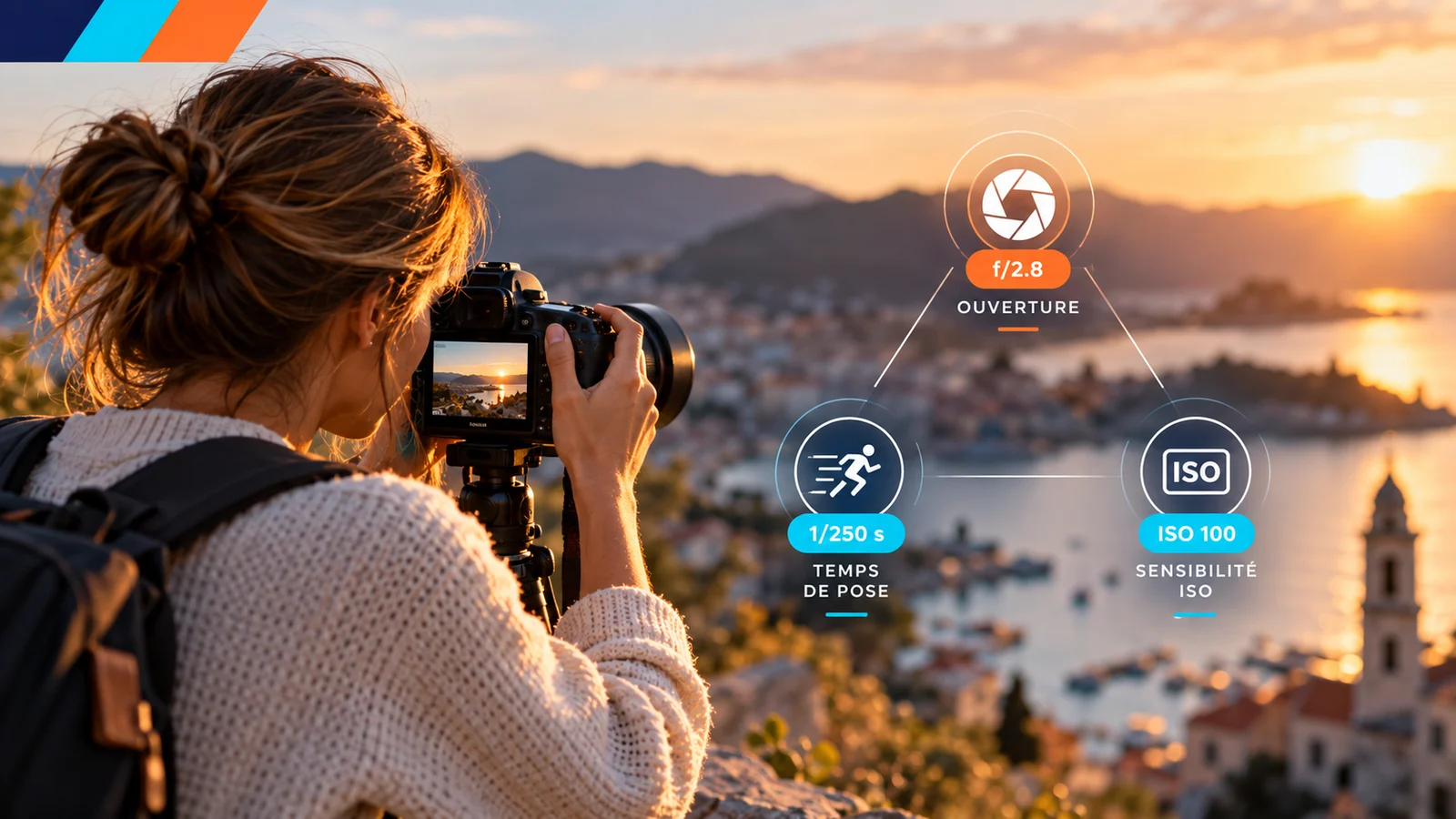
The exposure triangle: aperture, shutter speed and ISO without the jargon
The exposure triangle describes the relationship between aperture, shutter speed and ISO. All three influence brightness, but each also changes the look of the photograph. The useful skill is not memorising definitions: it is knowing which decision matters most for the picture you want.
Aperture: choose it when depth of field matters
A wider aperture lets in more light and can reduce depth of field, helping separate a subject from the background. A smaller aperture keeps more of the scene apparently sharp but reduces the light reaching the sensor.
Shutter speed: choose it when movement matters
A fast shutter speed can freeze motion. A slower shutter speed records movement for longer and can create blur or light trails. If motion is the main risk in the scene, shutter speed is usually the first decision to make.
ISO: use it to make the first two choices possible
ISO affects how the recorded signal is rendered and higher values generally come with more visible noise or reduced image quality. In practice, ISO is often the compromise that lets you keep the aperture and shutter speed your subject requires.
Which setting should you choose first?
For a portrait, aperture may come first because depth of field matters. For sport, shutter speed usually comes first because motion matters. For a landscape on a tripod, aperture and image quality may take priority while shutter speed becomes less critical. There is no universal order: the subject and the intended look decide.
Exposure is a creative compromise
Two settings can produce similar brightness while making very different photographs. That is why the triangle is useful: it forces you to think about motion, depth and noise together instead of chasing a meter reading.
Turn an idea into usable settings
The Camera Settings feature in Photo Coach starts with the photo you want to make — portrait, night scene, movement, landscape and more — then turns that intention into a practical ISO, aperture and shutter-speed recipe.
If a photo still looks wrong afterwards, the AI photo critique can help connect the visible result back to the technical decision.