
ISO in photography: what it changes and when to raise it
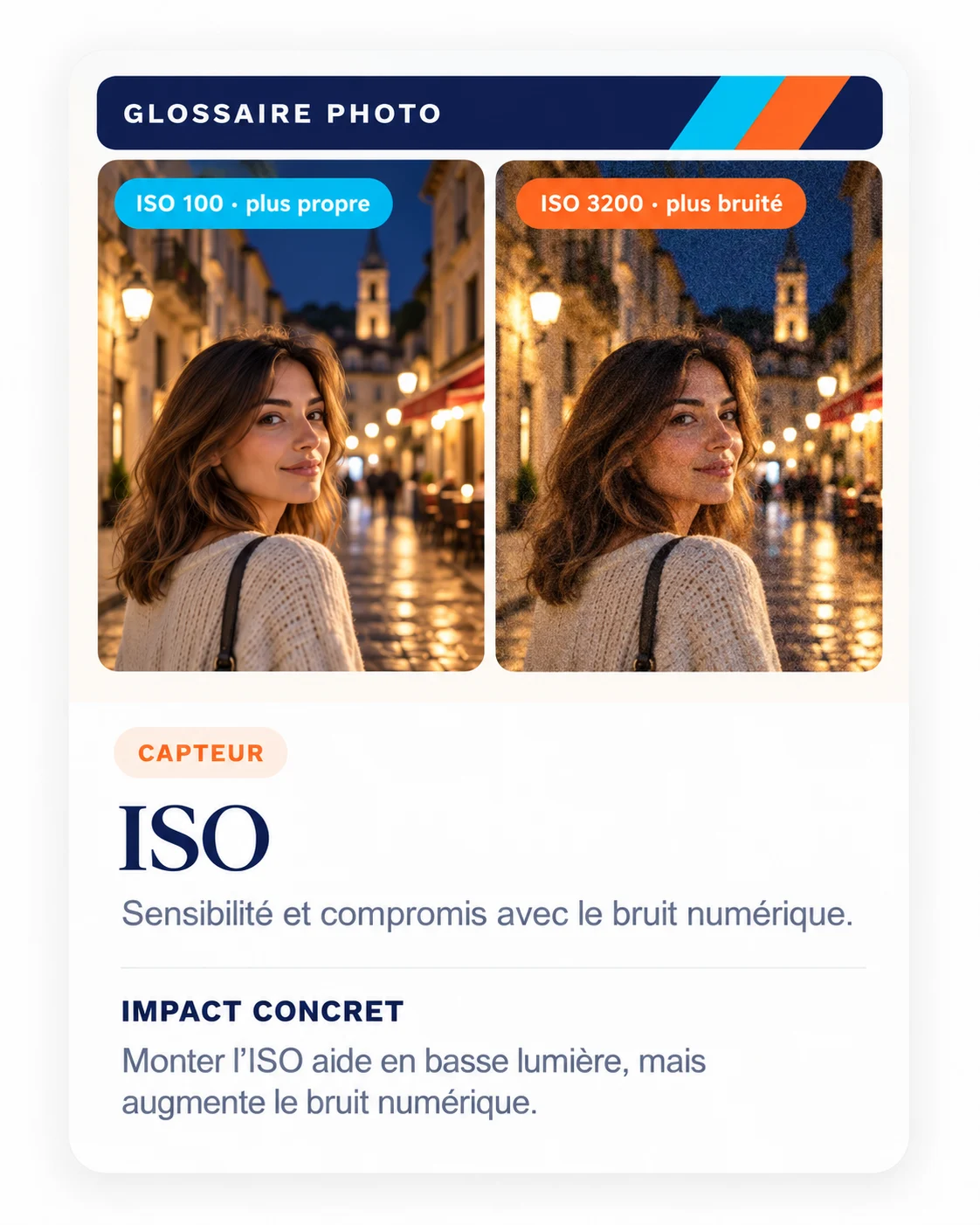
ISO controls how strongly the camera amplifies the signal recorded by the sensor. Higher ISO makes it easier to photograph in low light or use a faster shutter speed, but it can also increase visible noise and reduce image quality.
Low ISO is not always better
ISO 100 may give very clean files, but it is not automatically the correct setting. If ISO 100 forces a shutter speed that creates unwanted blur, raising ISO is usually the better decision.
Use ISO to protect shutter speed and aperture
Think of ISO as the setting that helps preserve the shutter speed and aperture you actually need. A moving subject may require a fast shutter speed. A portrait may require a wide aperture. If the available light is not enough, ISO gives you another way to balance the exposure.
That relationship is part of the exposure triangle.
When high ISO makes sense
Indoor events, sports, street photography at night and handheld low-light scenes can all justify high ISO. A sharp image at ISO 3200 can be much more useful than a cleaner image ruined by motion blur.
Let the final image decide
Photo Coach helps you connect ISO choices to visible results. Use the camera settings tool before the shot, then review your image with an AI photo critique to see whether noise, blur or exposure is the real limitation.